
What Makes Quality Firefighter Boots Different
Firefighter boots are not the same as work boots. They are life safety gear. NFPA estimates that U.S. municipal firefighters suffered 53,575 line-of-duty injuries in 2024, with 16,275 of those injuries, or 30 percent, occurring on the fireground. That matters because the fireground is exactly where boots are exposed to heat, water, sharp debris, falling objects, unstable footing, and long hours on hard ground.
A good pair of boots can help a firefighter move with more control. A poor pair can slow the crew down and raise the chance of injury. Many departments treat boot buying as a simple checklist item. That is a mistake. Footwear affects comfort, safety, speed, and long-term health. The wrong boot can lead to burns, blisters, sore joints, back strain, and early fatigue. It can also create risk for the department if the gear fails during a call.
Quality fire boots are built for the fireground. They use stronger materials, better liners, safer soles, and a fit that supports the body. They also hold up better during heat, water exposure, and repeated use. This guide explains what makes quality firefighter boots different. It covers fireground hazards, leather versus rubber, field testing, moisture control, boot care, and the role Hunter Apparatus can play in the buying process.
Key Takeaways
- Structural fire boots should be judged by heat protection, fit, weight, water control, grip, and field strength.
- Lighter boots can reduce stress on the knees, hips, and back during long shifts and repeated calls.
- A clear gear review process helps departments avoid poor purchases, early boot failure, and added risk.
Structural Protection and Fireground Footwear Hazards
Direct Exposure Risks on the Active Fireground
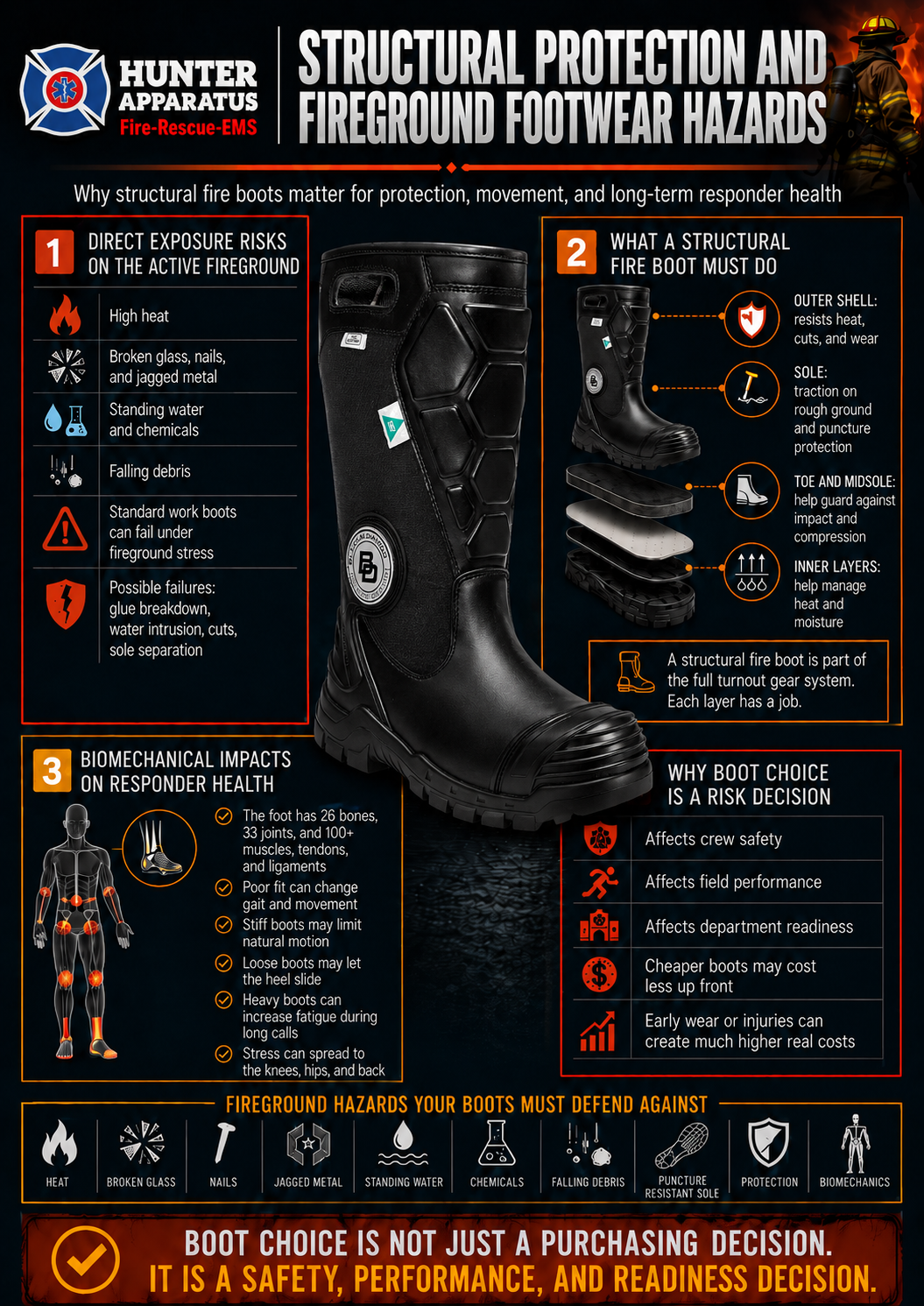
Firefighters work in harsh spaces. A single call can expose boots to high heat, broken glass, nails, jagged metal, standing water, chemicals, and falling debris. The boot must protect the foot through all of that while still allowing the firefighter to move.
Standard work boots are not built for this setting. They may be fine for a shop, warehouse, or jobsite. But fire scenes place much greater stress on the materials. Heat can break down glue. Water can enter the boot. Sharp objects can cut weak areas. Soles can separate. Once that happens, the firefighter is exposed.
A structural fire boot is part of the full turnout gear system. Each layer has a job. The outer shell must resist heat, cuts, and wear. The sole must grip rough ground and protect against punctures. The toe and midsole must help guard against impact and compression. The inner layers must help manage heat and moisture.
Biomechanical Impacts on Responder Health
Foot protection also affects the rest of the body. The human foot has 26 bones, 33 joints, and more than 100 muscles, tendons, and ligaments. It is the base for balance and movement. When a boot fits poorly, the firefighter may change how they walk to avoid pain.
That change can create stress in the knees, hips, and back. A stiff boot may limit natural movement. A loose boot may let the heel slide. A heavy boot may make each step harder during long calls. Over time, these issues can lead to fatigue, chronic pain, and missed work.
This is why boot choice should be treated as a risk decision. It affects crew safety, field performance, and department readiness. A department may save money on the front end with cheaper boots. But if those boots wear out early or cause injuries, the real cost can be much higher.
Material Differences and Structural Integrity
Many departments compare leather and rubber boots when buying turnout footwear. Both can have a place. The right choice depends on budget, call type, comfort needs, and long-term value.
Rubber Boots: Cost and Performance Limits
Rubber boots often cost less at first. They block liquids well and are easy to rinse after a call. They may also feel flexible right out of the box. For departments with tight budgets, that lower starting price can be attractive.
But rubber has limits. Rubber can trap heat and sweat inside the boot. During long calls, this can make the foot stay wet. Wet feet are more likely to blister. They also become more uncomfortable as the shift goes on. In high heat, trapped moisture can raise the risk of steam burns inside the boot.
Leather Boots: Comfort, Fit, and Construction
Leather fire boots often cost more at the time of purchase. But good leather boots can offer a better mix of protection, fit, comfort, and service life. Treated leather can help repel outside water while still allowing some heat and sweat to move out. This can keep the foot drier during long work periods.
Leather also shapes to the foot over time. This can reduce rubbing inside the boot. It can also improve ankle support and movement. Many leather boots are lighter than standard rubber boots. Less weight matters because firefighters take thousands of steps during training, station work, and emergency response.
The way the boot is built matters as much as the main material. A boot that depends only on glue may fail faster under heat, water, chemicals, and repeated flexing. If the sole starts to separate, the boot is no longer reliable.
Quality boots use stronger build methods. These may include perimeter stitching, secure fasteners, or other designs that help keep the sole attached. The goal is to keep the boot together through hard use, not only in a lab test.

Modern Fleet Evaluation and Field Selection Methods
Departments should not buy firefighter boots based only on a catalog page. A spec sheet can help narrow the options, but it does not show how the boot performs on your crew. Field testing is the best way to understand fit, comfort, weight, and movement.
Establishing a Gear Review Group and Testing Process
A gear review group is a strong first step. This group should include officers, firefighters, and purchasing staff. It may also include safety officers or training staff. The goal is to bring field experience and buying control into the same room.
The group should request test pairs from more than one brand or model. Firefighters should wear the boots during training that feels close to real work. They should climb stairs, drag hose, carry tools, crawl, kneel, walk on concrete, and work in wet areas when possible.
Assessing Foot Shapes, Fit Factors, and Performance
Departments should also test different foot shapes. Some firefighters need wide sizes. Some have narrow heels. Some have high arches. Some need more ankle support. One boot may work well for part of the crew but poorly for others.
Fit is not a small detail. A boot that is too loose can cause heel lift and rubbing. A boot that is too tight can create pain, pressure points, and numbness. A boot with poor flex can make crawling or climbing harder. A boot with weak support can increase strain during long shifts.
The review process should also include grip, donning speed, cleaning, drying time, and how the boot feels after repeated use. A boot may feel fine for the first ten minutes. The real test is how it feels after drills, station work, and long call volume.
This process helps the department make a smarter purchase. It also gives firefighters a voice in the gear they will use. That can improve buy-in and reduce complaints after the order is placed.
Turnout Performance Factors and Moisture Control
Good fire boots must manage water in two directions. They must help block water from the outside. They must also help sweat and heat move away from the foot.
Moisture Management, Skin Protection, and Heat Risk
Firefighters face water from hose lines, rain, wet floors, and outdoor scenes. If outside water enters the boot, the foot can become soaked. That can lead to blisters, soft skin, and loss of comfort. Too much moisture inside the boot can damage skin. Wet skin softens. Then it blisters, cuts, and tears more easily. During a long fire or long shift, this can affect how well a firefighter moves.
Moisture control also relates to heat risk. In high-heat events, trapped moisture can become a serious concern. Quality boots use liners or membranes that help block outside water while allowing some breathability. This does not mean the boot feels like a running shoe. It means the boot is designed to reduce trapped heat and moisture as much as possible for its class.
Traction Dynamics and Impact Absorption
Grip is another key performance factor. Firefighters move across wet concrete, stairs, ladders, grass, debris, and slick floors. The outsole must provide stable traction. A slip during a fireground task can injure the firefighter and slow the entire crew.
Shock absorption also matters. Many responders spend hours standing or walking on concrete. Each step sends impact through the foot and up the leg. Better cushioning and support can help reduce fatigue. This is especially important during long shifts, training days, and extended incidents.
Cleaning, Inspection, and Total Cost
Boot care affects service life. Even high-quality boots can fail early if they are not cleaned and inspected. Soot, chemicals, fuel, oil, and fireground residue can damage leather, stitching, liners, and soles if they stay on the boot. Boots should be cleaned after dirty calls. Crews should follow the maker’s care guidance and department policy. In many cases, that means removing loose debris, rinsing with clean water, and using approved cleaning products when needed.
Departments should inspect boots often. Look for worn tread, cracked leather, torn liners, loose stitching, sole separation, damaged toe areas, and weak pull straps. Any boot that shows signs of failure should be pulled from service and reviewed. Procurement teams should also look at total cost, not only the first price. A cheaper boot may look like a good deal. But if it fails early, causes complaints, or needs quick replacement, the department may spend more over time.
The Hunter Apparatus Solution
Hunter Apparatus, LLC helps fire rescue teams, EMS agencies, and industrial fire departments get the right gear for the job. We support agencies across Florida, Georgia, and Alabama.
We were founded in 2019 by Shawn Hunter, a former first responder with experience in emergency vehicle manufacturing and dealership sales. That background shapes how we approach gear selection. We understand that departments need equipment that works in the field, fits the crew, and supports the mission.
We work with trusted manufacturers, including Black Diamond, to provide personal protective equipment for demanding field use. The equipment we support is chosen for safety, fit, reliability, and long-term value. Our regional team helps departments review specs, compare options, set up sizing, and manage delivery. We help make sure your gear is ordered correctly for your station and your crew.
Our firefighter boot options focus on lower-body support, heat protection, moisture control, and field durability. The right boot should help stabilize the foot, reduce strain, and protect the firefighter during high-tempo work.
Contact Our Team
To confirm the right boot setup for your department, reach out to us directly to help you through the process.
Our regional team can help your procurement officers review specs, compare products, and build a testing plan for your station. We can also coordinate a product demo or provide an itemized quote.
FAQs About Firefighter Footwear
In This Article
- Key Takeaways
- Structural Protection and Fireground Footwear Hazards
- Material Differences and Structural Integrity
- Modern Fleet Evaluation and Field Selection Methods
- Turnout Performance Factors and Moisture Control
- Cleaning, Inspection, and Total Cost
- The Hunter Apparatus Solution
- Contact Our Team
- FAQs About Firefighter Footwear
- Reliability You Can Count On. Peace of Mind You Can Trust